
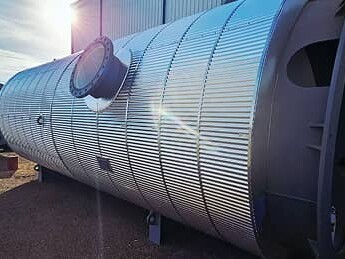
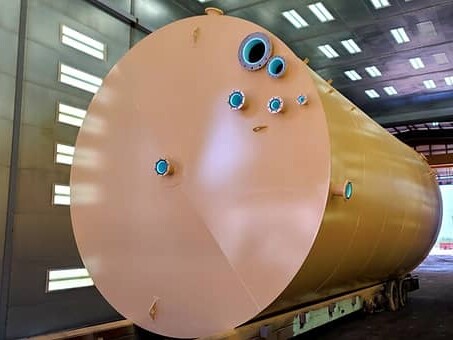
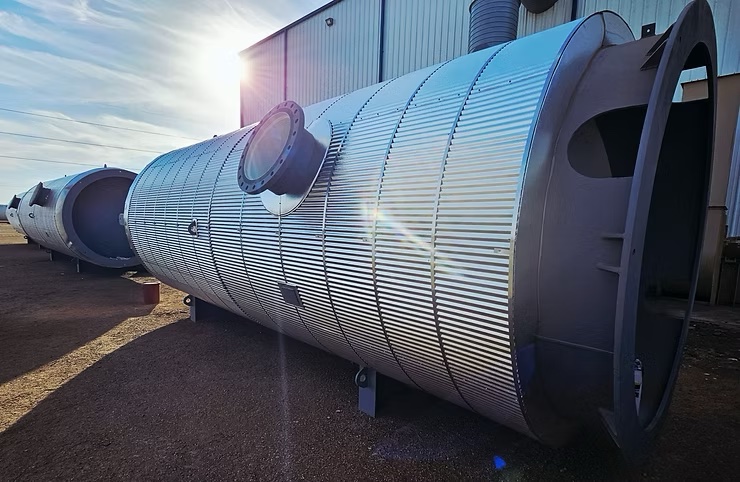
Hyperscale data centers are expanding at an unprecedented pace, driven by artificial intelligence, cloud computing, and high-performance workloads. These facilities demand massive cooling infrastructure to support high density compute environments. Traditional stick built cooling systems often struggle to keep up with aggressive schedules, workforce shortages, and strict quality requirements.
Modular Cooling System Fabrication for hyperscale data center projects provides a more efficient path forward. By fabricating cooling components in controlled shop environments and delivering fully integrated modules to the jobsite, contractors can reduce field work, improve safety, and accelerate commissioning timelines. This approach is becoming a critical strategy for delivering large scale data center infrastructure.
Why Hyperscale Data Centers Require Modular Cooling Systems
Hyperscale data centers operate at power densities that far exceed traditional enterprise facilities. AI clusters, GPU deployments, and liquid cooling technologies require advanced thermal management systems designed for reliability and scalability.
Modern hyperscale facilities rely on cooling infrastructure such as:
- Chilled water distribution systems
- Cooling skids and pump packages
- Heat exchanger modules
- Pre insulated piping assemblies
- Cooling plant mechanical modules
- Liquid cooling distribution units
- Modular mechanical equipment yards
These systems must be installed quickly while maintaining tight tolerances. Modular fabrication supports this demand by allowing cooling infrastructure to be manufactured off site and delivered ready for installation.
Prefabricated modular data center infrastructure enables faster deployment and flexibility, integrating power and cooling components into modular sections that can be installed rapidly and scaled as demand grows.
This approach is especially valuable for hyperscale builds where multiple phases are constructed simultaneously and capacity must be added quickly.
What Is Modular Cooling System Fabrication for Hyperscale Data Center Projects
Modular cooling system fabrication involves designing, assembling, and testing cooling components in a fabrication facility before shipping them to the project site. These modules are then set in place and connected to supporting infrastructure.
Typical modular cooling fabrication includes:
- Preassembled chilled water skids
- Integrated pump and valve assemblies
- Pre insulated piping modules
- Mechanical equipment racks
- Cooling distribution manifolds
- Prefabricated support steel structures
- Instrumentation and control integration
Each module is built as a complete system rather than loose components. This allows for:
- Factory quality welding and inspection
- Pre testing before shipment
- Reduced field installation scope
- Simplified commissioning
- Consistent repeatable fabrication
Factory built modules also improve quality control because fabrication occurs in controlled environments with specialized tooling and skilled labor. Prefabricated modular systems allow complex equipment to be built off site with enhanced safety and quality oversight.
For hyperscale data centers, this level of repeatability is essential when deploying identical cooling systems across multiple buildings or campuses.
Benefits of Modular Cooling System Fabrication for Hyperscale Data Center
Reduced Field Labor Requirements
Hyperscale data center construction sites often face workforce constraints and congestion. Modular cooling systems significantly reduce the amount of field welding, insulation, and assembly required.
Instead of installing thousands of individual components, crews set complete modules and perform final connections. This reduces:
- Hot work in the field
- Work at elevation
- Congestion in mechanical yards
- Trade stacking
- Schedule conflicts
Reducing field labor also improves safety performance across large scale projects.
Faster Project Schedules
Modular fabrication allows fabrication and site construction to occur simultaneously. While foundations and structures are built, cooling systems are fabricated off site.
This parallel workflow accelerates delivery timelines. Prefabricated modules can accelerate schedules through off site manufacturing and reduce on site labor exposure.
For hyperscale data centers, schedule acceleration directly impacts revenue generation since earlier commissioning enables faster compute deployment.
Improved Quality Control
Controlled fabrication environments provide:
- Consistent weld quality
- Better dimensional accuracy
- Factory insulation installation
- Pre installed instrumentation
- Hydrostatic testing before shipment
This reduces punch list items and improves startup reliability.
Enhanced Safety Performance
Modular cooling system fabrication reduces risk by limiting:
- Field welding
- Confined space work
- Elevated installations
- Heavy manual handling
- Weather related hazards
By shifting work to fabrication facilities, contractors improve safety metrics across the project lifecycle.
Scalable Infrastructure for Hyperscale Growth
Hyperscale data centers expand rapidly. Modular cooling systems support phased deployment by allowing additional modules to be fabricated and installed as demand increases.
This scalability aligns perfectly with hyperscale growth strategies.
Types of Modular Cooling Systems Used in Hyperscale Data Centers
Chilled Water Cooling Modules
These modules include:
- Pumps
- Valves
- Heat exchangers
- Sensors
- Insulated piping
- Structural skid base
They are fabricated as plug and play assemblies.
Cooling Distribution Pipe Racks
Prefabricated pipe rack modules distribute chilled water throughout the data center campus. These modules often include:
- Multi tier piping
- Insulated supply and return lines
- Structural steel supports
- Expansion joints
- Instrumentation
These systems reduce field pipe installation significantly.
Liquid Cooling Distribution Modules
AI data centers increasingly use liquid cooling. Modular distribution units provide:
- CDU systems
- Secondary cooling loops
- Quick connect manifolds
- Monitoring instrumentation
These modules are ideal for high density GPU environments.
Mechanical Yard Cooling Modules
Outdoor cooling plants are often fabricated as:
- Pump yard modules
- Heat rejection skids
- Valve yard assemblies
- Equipment support structures
These modules are delivered ready for installation.
In House Fabrication and Insulation Advantages
One of the most valuable aspects of modular cooling system fabrication for hyperscale data center projects is performing insulation in house before shipment.
This approach provides:
- Consistent insulation quality
- Reduced field insulation work
- Weather protected installation
- Improved thermal performance
- Reduced startup delays
Fully insulated modules also minimize site congestion by eliminating multiple trades working in the same area.
Engineering and Procurement Integration
Successful modular cooling fabrication requires coordination between:
- Engineering teams
- Procurement teams
- Fabrication shops
- Logistics planning
- Construction teams
This integrated approach allows modules to be designed specifically for transport, lifting, and installation.
Engineering considerations include:
- Shipping dimensions
- Lift points
- Modular connection locations
- Expansion allowances
- Field tie in points
This level of planning ensures seamless installation on hyperscale campuses.
Logistics and Delivery for Hyperscale Data Center Modules
Transporting modular cooling systems requires detailed logistics planning. Fabrication teams coordinate:
- Trucking routes
- Oversized load permits
- Delivery sequencing
- Crane picks
- Site staging areas
Modules are delivered in the exact order needed for installation. This reduces storage requirements and keeps schedules moving efficiently.
Modular Cooling Systems Support Execution Excellence
Hyperscale data center construction demands precision, speed, and reliability. Modular cooling system fabrication aligns with these requirements by delivering:
- Integrated systems
- Reduced field work
- Faster installation
- Improved safety
- Consistent quality
- Scalable infrastructure
As AI and hyperscale data center demand continues to grow, modular fabrication will play a central role in delivering cooling infrastructure that supports high density computing environments.
The Future of Modular Cooling System Fabrication for Hyperscale Data Center
The next generation of hyperscale data centers will continue pushing thermal limits. Liquid cooling, higher rack densities, and increased compute loads will require even more advanced cooling infrastructure.
Modular fabrication provides the flexibility needed to adapt to evolving cooling technologies. By building integrated modules in controlled environments, fabricators can deliver consistent, scalable systems ready for rapid deployment.
Modular Cooling System Fabrication for hyperscale data center projects is no longer just a construction strategy. It is becoming a foundational approach for delivering large scale AI infrastructure safely, efficiently, and with execution excellence.